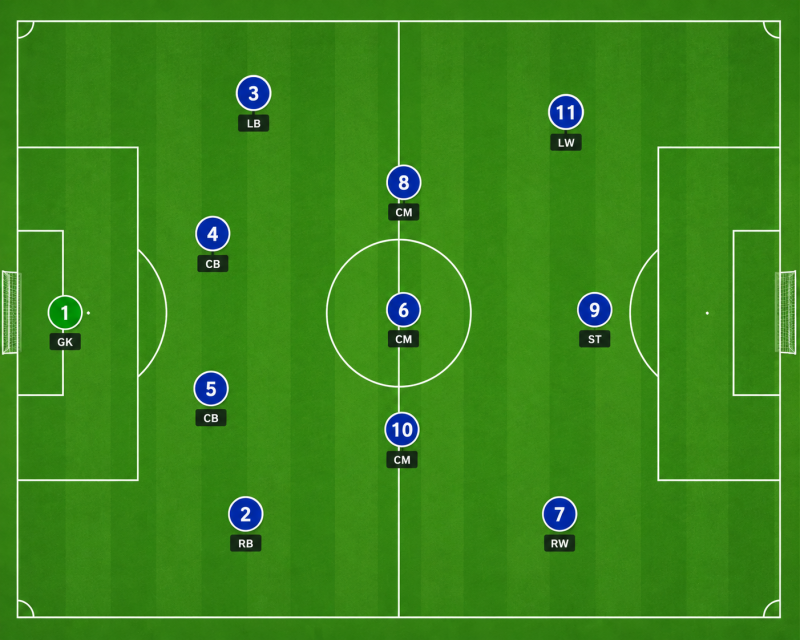
Is the classic 4 at the back still the best and most efficient defense?
What actually is the 4 at the back?
The 4 at the back is one of the most important and widely known football tactics. It involves 2 centre backs and a left and right back either side. They sit informing of the goalkeeper and behind the midfield, their job is to tackle the ball and stop the opposition getting shots on the goalkeeper. They also have so be good passers in order to get attacks going.
Why is it so popular?
The iconic 4 in defense is the most common defensive shape primarily due to it meaning that it makes a more balanced team. This means that structural integrity and balance in the team and also means the them can have e up the pitch. It naturally covers the entire width of the pitch making it harder for the opponent to find gaps whereas the back 3 makes it easier to be exploited out in wide areas of the pitch. The 4 at the back also provides tactical versatility and flexibility to adapt and try new tactics and roles. For instance, you could have an inverted fullback and also the fullbacks can play a role going forward by overlapping the winger in attacking movements. It is also most common defensive shape as it allows the team to absorb and soak in counter attacks when the ball is lost.
The Fullbacks out wide
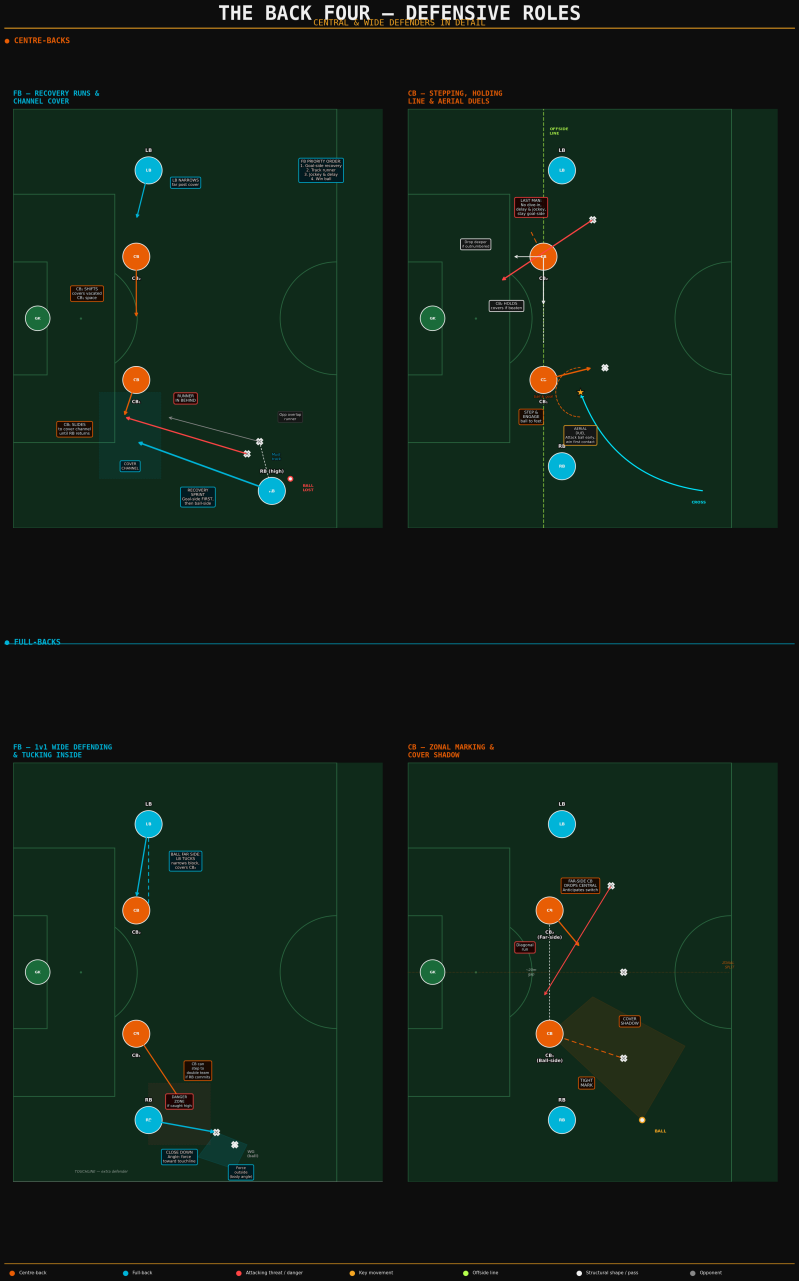
The fullbacks play a slightly different role compared to their central partners. They have to stop crosses into the box and have to isolate their man in 1v1 defending on the wide regions of the pitch. In order to do this, they must be fast and have to have a great ability to jockey their man; jockeying is where the defender steps away from his man and follows them and then waits for the moment to tackle. When out of possession, they tuck in and act as another central defender. However, what makes fullbacks such a threat is their attacking ability. They make overlapping runs and are excellent ball carriers. They can cross the ball in but additionally cut in and shoot. They are excellent at both defending and attacking.
The Centre Back pairing
The Centre Backs have a very important role in the system, with them having to do the dirty work. One of their main duties is marking the striker to make sure they don't get passes or turn them and run through on goal. They have to be aerially dominant and have to win ariel duels from crosses and clearances. When winning the ball, they always try and intercept the pass and jockey their man. Tackling is still important though and the defenders always try and stay on their feet when tackling but if it's the only option, they will do the high risk, high reward slide tackle. When going forward, they are lethal from set pieces and contribute frequently. They also need to be able to pass the ball when building from the back and also need to have good ball skills when playing out from the back.
What are the weaknesses
Despite being very efficient, the 4 at the back still has its weaknesses. For example, there is a big gap in between the central and wide defenders in which opponents can, and do, exploit. Also, they can get overloaded in the wide regions, letting the opponent weave their way past the fullback. To add on, they are vulnerable to the switch of play which leaves them wide open.
How does it compare to b back 5?
The back 5 solves one of the back 4's biggest problems. With the extra centre back, it makes the gap between the fullbacks much smaller meqeqning they are harder to break down. With the extra centre half it means they team is hard to get past and can withstand a high intensity attacking line. However, what the 4 at the back can do that the 5 back can't is that is allows an added player up the pitch to contribute more effectively in attack. Also, it put lest pressure on the defence as the ball can be won higher up the pitch and it fosters a more positive, attacking mindset.
How does it compare to a back 3?
The back 3 means ultra control in central defence, but what that means it that there is high vulnerability out wide, if they can get past midfield, they can stretch and pin the centre back trio into their penalty area. This allows for the opposition front line to run in and get shots on goal; but what the 3 back lacks out wide it makes up for in the middle, with a good wide midfielder setup, the team can hold the wide players and for them through the centre where the defensive trio can win the ball and get it forward, making them almost impenetrable in the central region.
Is 4 at the back really the best?
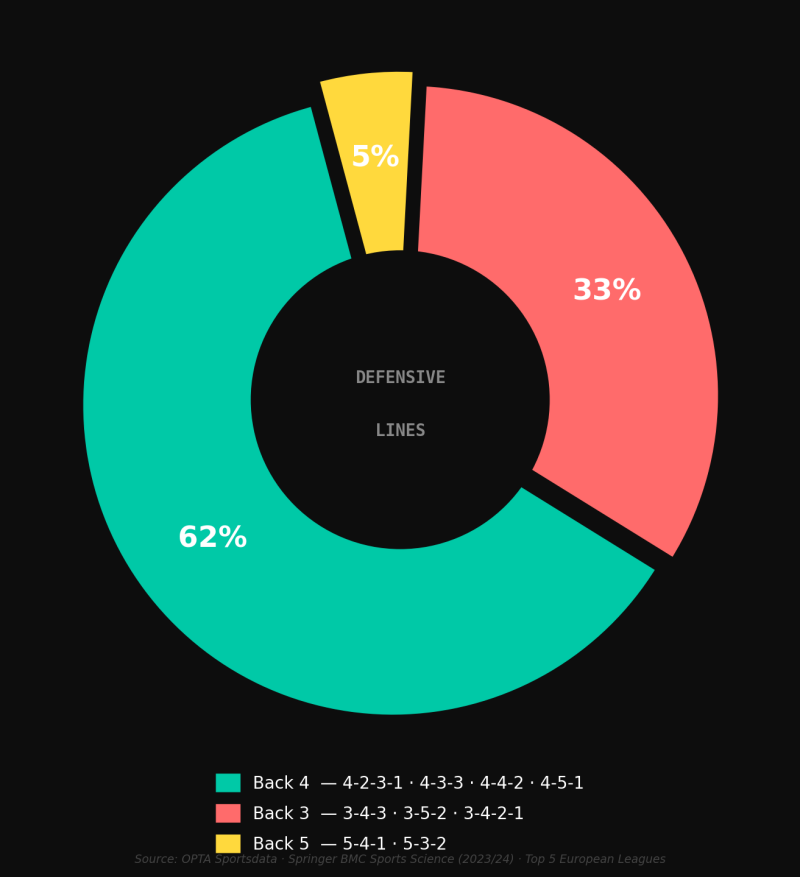
Whether the 4 man defensive line is the best is down to the opinion of the coaches, but to most, yes, the 4 at the back is the best. Stats back this up with 90% of Champions League winners using it and between 60 and 70% of all European football teams using it. Over history, it also is the formation which lets the least goals in and keeps the most clean sheets. So yes the 4 st the back is statistically the best but if other shapes are played well, they can match this.
Final Words
The 4 at the back is a widely used defense line used by many top coaches across the world. It provides a solid defensive structure that allows balance throughout the team. It's does have its weaknesses like a big geo between the centre and full backs. The 3 and 5 at the back allows for defensive structure and and solidity but the 3 at the back means that they can be exploited out wide. The stats prove that it is the best and has been used for decades.